Return here to the Shadows in Eden home page.....
Showing posts with label Emperor Nero. Show all posts

Saturday, May 24, 2014

A Harvesting of Souls

If you who are reading this are Catholic, or Baptist, or Jewish, or Muslim, or Neo-pagan, or agnostic or atheist, whatever your belief or non-belief, the chances that one of your deceased relatives has recently converted to the Church of Mormon are actually quite high. Deep in the impregnable heart of Granite Mountain in Utah are the high-security archives of the [1]Church of Jesus Christ of Latter-day Saints, informally known as the [2]Mormons. These ever-growing archives so far list the names of some ten billion individuals garnered from all histories, cultures and geographies, and are recorded with a conscientious attention to detail that could reasonably be described as obsessive. But what end does this gargantuan exercise in religious bureaucracy serve?

A corridor in the Granite Mountain vaults.
It’s to do with converts. In religion, it usually is. Joseph Smith, the self-styled prophet and founding father of the Mormon Church, realized that if the living could offer potential fertile ground for swelling the numbers of his new religious movement, what possibilities for doing this must exist among the legions of the departed? The dead were, after all, [3]compliantly unresisting to new persuasions. All that would be needed would be to know the specific name of the deceased, then use a living member of his movement to act as a temporary host to the name – and a new [4]convert to the faith was created.

And so this practice of the harvesting of souls has continued, and continues to this day. The moral question of actually asking the permission of that person’s surviving kin does not apparently figure in the Mormon scheme of things. What counts is eventually bringing the whole of the human race who have ever been a part of recorded history into the Church of Mormon. So far, the Church of Mormon is about a sixth of the way there. But before you object to this dubious practice (which, if you care about the moral rights and beliefs of your ancestors, you rightfully should), it might be worth looking at the viability of what is happening with all those billions of names in Granite Mountain, Utah.

The entrance to the Granite Mountain vaults, bored into the mountain itself.
The whole point of conversion, surely, is that the soul in question, whether living or dead, has undergone some sort of an epiphany which prompts the conversion. If such an experience has not taken place, then what does a conversion count for? A forced or unsolicited conversion is a mere hollow thing, a sham made under coercion. The current tragic and shameful plight of the abducted Nigerian schoolgirls is a case in point. Their captors claimed that the girls had converted to Islam – a claim which can only be treated with the scorn that it deserves, and yet another example of Islamists shooting themselves in the foot. In this sense, which is the only morally valid sense, the near-century-long Mormon practice of converting the dead by proxy has so far produced exactly zero new members to their faith.

The Family History Library in Salt Lake City.
On the plain below Granite Mountain in the Mormon-founded Salt Lake City is the more accessible Family History Library. Here members of the public can seek out their own ancestral lines, and perhaps discover (which seems to provide a strong motivation) that they might have a family connection with the aristocracy, or even with royalty. But is such a discovered blue blood connection really so remarkable? Not really, as it turns out. Because of the exponential growth of human populations, as long as you go back far enough in time, you almost certainly can turn up some famous name in your lineage. A considerable proportion of the western world apparently can genetically claim the Emperor Nero as an ancestor. Ah, but who would want to? But even this claiming of ancestors is not quite as cut-and-dried as it seems.

We predominantly inherit our DNA through the mitochondrial DNA of our mothers. It makes considerably more sense to trace our lineages through our maternal side than, as is the common practice at least in Western society, through our paternal parentage. A paternal family tree is a thing on paper, a mere compiling of male heirs. When it comes to inherited information, however, it makes little sense to science. But even this is not quite the end of the story.

The towering genius of William Shakespeare or the dark ruthlessness of Cesare Borgia: fragments of both might be contained in who you are.
Although they might not be inherited in a genetic sense, because matter in nature is not destroyed but transformed and recycled, we all have atoms in our bodies that once were a part of Shakespeare or Darwin or Emily Dickenson – or on the downside, one or other of the Borgias. It is a part of our human heritage, and it falls to us to balance these forces within us that make us what we are. And what we truly are cannot be determined by the religious beliefs of someone if those beliefs are not our own, however fervently they might imagine it to be so.
Hawkwood


Notes:
[1] Joseph Smith, the Church’s founder (the anonymous portrait, left), claims to have discovered the Book of Mormon in 1823 in the form of a series of bound gold plates which he alleged that he unearthed from a Native American burial mound. The plates apparently were inscribed with characters in an unknown language, but having been given a device in the form of a special stone by an angel called Moroni, Smith found that he could read the text, which he then dictated as the Book of Mormon. Smith alleged that the angel then claimed the plates back, and no hard evidence for their existence has ever been produced. Having ordered a printing press establishment destroyed that was critical of both his beliefs and his polygamy, Smith, then in jail over the incident, was shot and killed when an angry mob stormed his place of incarceration. He was 38.

[2] Two Angels: Mormon and Moroni were the names of two father-son angels/ancient prophets alleged by Joseph Smith to have been involved in the production of the gold plates that were the original Book of Mormon. In an apparent attempt to imbue the New World with some Old World respectability, Smith claimed a New World scenario for the ancient events related in the Book of Mormon, which claims are unsupported either by the archaeological record or by contemporary DNA mapping.

[3] Baptizing the Dead: This practice of baptizing the dead, known as ‘baptism by proxy’ or ‘vicarious baptism’ has been performed by the Church of Mormon since 1840. The Church claims that the departed are given an option to decline the ceremony, but in all honesty, how can those performing the ceremony possibly know this? Are they communing with the dead to determine this? Such practices are forbidden under Biblical Mosaic law, so an inherent Christian doctrinal contradiction would seem to be present in the ceremony. The entire basis for the practice probably stems from a mistranslation from the Greek of the Old Testament Septuagint, where the term does not actually mean 'baptism' as such, but 'ritual washing', which would be entirely appropriate for the recently deceased. So it seems that the tradition is another example of a religious practice which has been founded upon a misunderstanding.  

[4] A Puzzle for Islamic Law: If your forebear happened to be an adherent of Islam, the curious situation now exists in which, although in Islamic law the prescribed penalty for apostasy is death, your forebear, being already dead, is beyond sentence. What are you going to do? 


Sources:
Steve Jones: In the Blood: God, Genes and Destiny. Harper Collins, 1996. The substance of this post is drawn from the first chapter of Professor Jones’ book, in which the geneticist relates his own experience of his visit to the Family History Library.

Bill Bryson: A Short History of Nearly Everything. Doubleday, 2003. At over 600 pages, this particular history is not as short as its whimsically ironic title suggests, but it is a generous gold mine of information, discussing each discipline of science with an entertaining accessibility of language which makes its hefty length flash by. It is the source of the statements in my post’s last paragraph.

The top three photographs are from official Church of Jesus Christ of Latter-day Saints websites. The Voynich Manuscript is catalogued as MS 408 in the Yale University Library.


Saturday, September 21, 2013

John Calvin's Tough Love

School diaries are a big deal here in the Netherlands, with many commercially available themed variations, from pop idols to teen trends. Those religion-based schools protective of their pupils’ moral standards even print their own student-designed ones. And so it was with the Calvinist Pieter Zandt school in the heart of the Netherlands Bible Belt. But with this month’s commencement of the new school year something went seriously awry.

The statue of John Calvin in Geneva, Switzerland. Man presumes to know the mind of God, and presumptions become set-in-stone doctrine. 
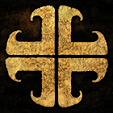
This particular school made the columns of the national newspapers when it recalled three thousand of its own self-printed school diaries. The reason: one postage stamp-sized photo on the front pictured a boy sporting a familiar peace sign on his T-shirt (below). This sign (so the school board reasoned) had associations with the occult and with the [1]‘Cross of Nero’. [2]Emperor Nero, of course, was infamous for his persecution of early Christians. Clearly, the offending diaries had to go.

A detail of the cover of the destroyed Pieter Zandt school diary. The offending peace sign is just visible on the white T-shirt in the back row.
And go they did. All three thousand copies of the newly-issued school diary were destroyed. Now, it might be easy to scoff at such over-sensitivity (not to mention the sheer waste of time, resources and €20,000 costs involved), certainly when we consider that, whatever associations the symbol might have had in the past, what it conveys now is a simple message of peace. But censorship through an act of destruction has a way of focusing on who is doing the destroying, and scrutiny turns around to face the scrutinizer.

For John Calvin, only the Chosen Few would hear the choirs of Heaven. But it was Calvin who decided this. For wiser (and less presumptuous) mortals, the mind of God remains as inscrutable as ever.
In destroying the diaries, the school board strove to uphold its own faith-based standards. But what are these standards? They are those of Calvinism, that branch of Protestantism promulgated in the 16th-century by Frenchman John Calvin. Calvin was as anti-Catholic as Martin Luther, the founder of Protestantism, but he deviated from the teachings both of Luther and the Papacy in that he advocated a doctrine which he called [3]predestination. The doctrine is simple enough: Christ did not die for all humankind, but only for the Elect – the Chosen Few – who would be saved and ascend to Heaven. All others are damned and will spend eternity separated from God in the unquenchable fires of Hell.

Hell in the 2005 film Constantine appears as our own world in fiery devastation, with eternally gridlocked freeways and highrises in ruins.  Hell can always be found within ourselves, and the human imagination can supply what our direct experience lacks, even to the most terrifying of places. 
Calvin chose the term ‘predestination’ for a reason: all humanity, according to Calvin’s doctrine, was already predestined. Which is to say that before the Fall in Eden, before humankind was even created, God had decided who was going to Heaven and who would roast in the Eternal Fire. Calvinism and its doctrine is therefore a kind of extreme religious fatalism: if God already has you on his blacklist, then you are predestined to burn in Hell. There is no free will, there is no chance to change the outcome, and there is no redemption. Your fate for eternity has already been sealed, with God dispensing a sort of omnipotent tough love with brutal finality.

John Calvin’s deity is therefore a being who treats his own creations with a form of refined fatalistic sadism: this deity already has decided who is going to be tortured for eternity – and then goes ahead and has them tortured anyway. In which case, God moves in ways that are more than just mysterious. If you endorse Calvin’s doctrine, then you additionally accept that he also moves in ways that apparently have an edge of calculated cruelty. The question is: does believing in such a ruthless reward-and-punishment god have an adverse effect upon the human psyche?

Peace is a fragile thing, subject to the tides of human affairs and differences of faith.
The school board strove to protect its students from what it perceived as un-Christian symbolism, and its objections to the cover of the diary were specifically to do with the peace symbol’s alleged original association with the persecution and deaths of Christians. Alas for humanity, the accumulated deaths by [4]persecution, [5]slaughter, [6]warfare or acts of [7]genocide in the name of the Christian faith, whether by [8]Catholics, [9]Protestants, or any other Christian [10]denominations, are all too real, and can be reckoned in the millions. These persecutions and deaths by – not of – Christians are documented history, although I rather suspect that the events (and others like them) related in my notes below do not feature prominently in the history lessons of the Pieter Zandt school.

So in the light of the destruction of their school diaries, and the reasons behind that destruction, here is my own history lesson for the pupils of that school: the Christianization of Europe is estimated to have cost some ten million pagan lives – [11]one hundred times more than the number of Christians executed under the Emperor Nero and for three centuries afterwards – remembering that this was before all the various Christian-against-Christian wars, conflicts and persecutions between the different denominations which followed in the centuries that came after.
Hawkwood 


Notes:
[1] The now-familiar peace symbol (right) has a more chequered history than is generally realised. Ostensibly it was created in 1958 by the London designer Gerald Holtom, initially for the anti-nuclear weapons movement of that time. It is formed from the two superimposed semaphore letters ‘ND’ for ‘nuclear disarmament’. But the symbol was allegedly in use before this, apparently as an inverted cross associated with the crucifixion of the apostle Peter. The tradition that Peter was crucified on an inverted cross originated in an apocryphal Latin text of the 2nd-century known as the Acts of Peter. But since this text also has the apostle bringing smoked fish back to life and making dogs talk, it seems reasonable to doubt the veracity of the account of his death. 

[2] Please see note [5] in my post 666: The Number of the Beast. In Nero's day the term 'Christian' had not yet been coined. There were groups of different beliefs loosely centred around Christ's teachings, no one of which had more or less validity than another. 

[3] Calvin also vigorously endorsed the ‘sin and guilt’ teachings of Augustine (please see my post Shame). 

[4] Please see my post The New Church. Catholicism emerged as the dominant Christian force by ruthlessly eliminating other beliefs such as the Gnostics, Manichaeans and Paulicians

[5] In the 8th-century the Christian monarch Charlemagne (left) decreed the death penalty for anyone who refused conversion and baptism. In the year 782, at Verden to the north of Paris, four thousand five hundred pagan Saxons were rounded up and beheaded in a single day, at the end of which Charlemagne retired from the scene of the slaughter and attended Mass. In this single horrific afternoon the Christian monarch had therefore put to death as many pagans as there had been Christians executed during the entire reign of Emperor Nero. But worse was to follow: the following thirty years left two thirds of the entire pagan population dead.


[6] The death toll in the 17th-century Thirty Years’ War is estimated to have been some seven and a half million lives (source: necrometrics.com, retrieved on September 14, 2013), with Europe being left largely in a state of devastation. The conflict, which literally did last for thirty years, was essentially a religious one, with Catholics fighting to keep the Holy Roman Empire intact, and with Protestants equally determined to break the power of the Papacy. The scene (above) by Henri Motte portrays full-scale religious warfare: wearing the armour of war beneath his cardinal’s scarlet, Cardinal Richelieu surveys the approaching English fleet which supported the Protestant French Hugenot forces at the siege of La Rochelle. The siege took place between 1627 and 1628, and ended in defeat for the Hugenots, although the tide of the war would eventually turn against the Papal forces.

[7] Please see my post A Dark Crusade for an account of actual genocide instigated by the Papacy.

[8] In February of 1658 the entire population of the Netherlands – then some three million people – was sentenced to death for heresy by the Papal Inquisition. The Duke of Alva (right), commanding the occupying Spanish forces, managed to formally execute some eighteen thousand six hundred  Dutch citizens over a six year period, although the numbers massacred by his troops added considerably to this total. Again it was a situation of Protestants defying Papal authority, with the Papacy yet again demonstrating that it was prepared to wade through blood to hold onto power. Today Catholicism in the Netherlands is generally confined to regions in the southern provinces adjoining the Belgian border.

[9] Please see my post Martin Luther's Final Solution for a documented account of an act of genocide instigated by Martin Luther.

[10] In the 17th-century four Quakers known as the Boston martyrs – three men and a woman (left, Mary Dyer being led to execution) – were hanged in Boston by Puritans for professing other-than Puritan beliefs. The Puritans were a sort of right-wing version of the Calvinists, although it is largely a fallacy that the Puritans sailed for the New World to avoid persecution for their beliefs. The truth is nearer to being that they were so intolerant of the beliefs of others that they sought a land where Puritanism would be the only practicing and tolerated religion. As events showed, they were prepared to kill their fellow Christians to make that happen.

[11] This is based upon a maximum high-end estimate of 100,000 over the first three centuries. The actual number of executions specifically of Christians under Nero is unknown, but might have been between three to five thousand. These would not have been Christians as we would have recognized them, as many would either have been Gnostics, or Apostolic (subscribing to the doctrines of Paul), or adhering more to the traditions of the Hebrew prophets (subscribing to the doctrines of James), or other interpretations of the new faith, which was still thought of by the occupying Roman authorities as having a variety of cult followings.

Sources:
Deborah J. Shepherd: The Convergence of Paganism and Christianity in Northern Europe: The Conversion and Archaeology. Program for Interdisciplinary Archaeological Studies, 1996, University of Minnesota. Published in PDF by Academia.edu. The transition in Europe from pagan religions to Christianity was neither smooth nor benevolent. At times it was an uneasy collision between two differing world views, with a compromised merging of customs and traditions. At other times, as under Charlemagne, the transition was mandatory, bloody and abrupt. In Britain, Scandinavia and elsewhere many sites of pagan worship were forcibly annexed and destroyed, and churches were built upon their foundations. Our word 'bigot', used to describe someone who is arrogantly intolerant of others, actually comes from 'Bei Gott' ('By God'), used by the Frankish and Germanic pagans to imitate the exclamation of aggressive conversion activity practiced against them by Christian missionaries. This metal 'Hammer of Thor' Viking talisman (right) has been disguised as a Christian cross, allowing its wearer outwardly to acknowledge token allegiance to the new religion while retaining loyalty to still-familiar gods.


PLEASE NOTE:
Discussions of these topics which I have had in the past with others have turned with apparent grinding inevitability in the direction of some Christian soul who has been only too keen to point out to me the millions who perished under the rule of Stalin (or some other suitably atheist tyrant from history). But playing the ‘atheists versus believers’ death count numbers game achieves nothing. The whole point is that religion by its nature is supposed to invest a believer with some intrinsic altruism, some basic humanity. History shows that in practice this is not what happens. Subscribing to this or that faith or denomination clearly no more equips someone to behave more tolerantly, more altruistically – or even more morally – than a confirmed atheist. So what end does religion serve?

Tuesday, February 26, 2013

666: The Number of the Beast

“Here is wisdom. Let him that hath understanding count the number of the beast: for it is the number of a man; and his number is Six hundred threescore and six.” Oh, how much dread this brief phrase has invoked! The phrase, from the New Testament’s [1]Book of Revelation, has provided fertile source material for [2]artists, assorted metal bands and horror blockbuster scriptwriters, and has been the source of much speculation by serious scholastic opinion at one end of the spectrum and doomsday conspiracy theorists at the other.


The number has even generated its very own medically-recognized phobia with the Scrabble-defying name of hexakosioihexekontahexaphobia (no, I don’t know how to pronounce it either), which has resulted in such startling urban changes as U.S. Highway 666 being renamed Highway 491 for that specific reason.


When fear gains the upper hand then chaos reigns, and common sense goes straight out the window. But as often as not, fear is not a rational thing, and just how irrational our fear of the ‘beast’ and the number 666 really is can be realized with a better understanding of the true meaning behind the phrase. The first clue is right there in the phrase’s opening words: “Here is wisdom. Let him that hath understanding…”. With these words we are given the clear signal that this phrase is not intended as some ghastly portent, but as containing concealed ‘wisdom’, if only we can unlock the puzzle and gain access to that inner knowledge. We are specifically told that we will need understanding – insight – to solve the puzzle, or as Jesus himself says [3]elsewhere: it is the sort of knowledge intended ‘for those who have ears to hear’.


We are further told that 666 is ‘the number of a man’. But which man? Based upon [4]gematria, candidates ranging from the [5]suitably bestial Roman emperor Nero to the [6]Pontiff and even Mohammed have been put forward. So we have a two-part puzzle to solve: the identity of this ‘man’, and why his number totals that mysterious 666. But there is another factor: we need to remember that we are reading what is in reality a translation from the Greek original. Did the author of Revelation really mean a ‘beast’? The word in English is immediately scary and emotive, suggesting all manner of misshapen horrors lurking in the shadows. But the word used in the original Greek is Θηρίον (thērion), which suggests something wild, primal and untamed. And such a force need be neither ‘good’ nor ‘evil’, but merely impartial – as neutral as an unleashed thunderstorm which, for all its display of awesome power, simply ‘is’. So our lurking beast is already looking a touch more friendly and less sinister. But what about that most notorious of numbers?


In the ancient world the sun and moon were thought of as planetary ‘spheres’ together with the other then-known [7]planets, and each of these seven spheres were assigned their own seals and [8]magic squares. And it is the magic square of the sun that provides the key to unlock our puzzle. For adding all the numbers together in the sun’s magic square produces (as you probably have now guessed) the total of 666. So it is the [9]sun which must have some special connection with this number. And surely the sun fits the job description of thērion – not a beast, but an untamed (and untameable) force of splendor and power.


But the phrase is not an isolated number. About the ‘man’, it ends: ‘and his number is 666’, which in its original Greek yields the gematria value of 2368. And this number in Greek letters spells out: Ιησούς Χριστός – ‘Jesus Christ’. I am aware that to many, the realization that the ‘man’ alluded to in this notorious passage turns out to be Jesus himself will probably either provoke an outraged rejection, or require them to sit down quietly for awhile to catch their breath. But that the number values of the text in its original Greek yield this actual name is surely beyond all coincidence. And the only way we can make sense of these findings is to press on deeper into Gnostic beliefs.


The spiritual vision of the Gnostics involved the belief that all that is visible to us in our material existence – including the life-giving sun – has a higher equivalent in the spirit. So there is a ‘spiritual’ sun beyond the actual sun – the ‘666 sun’ – which we see in the heavens, just as there is a true Christ – the Christ of the Holy Spirit – beyond the man – the son – who appeared on earth. What the phrase is telling us is that we need to seek beyond the material world – beyond what we see and experience with our senses – to reach the greater mysteries of the spirit which lie behind these outward appearances.

I cannot deny that a part of me rather regrets raining on the parade of all those growling goth metal bands and horror scriptwriters, but I would sooner press on to the heart of a mystery, wherever it might lead. And where this particular mystery leads is to realize that what this notorious phrase in the Book of Revelation describes is anything but the creature of bestial evil which our own [10]misreading of the phrase has created. It is rather a message of grace and hope, and its messenger is our own life-giving sun.
Hawkwood


Notes:
[1] The Book of Revelation 13:18

[2] Ah, mea culpa! It provided one of the key sequences for my own REVELATIONS video. Please see my post Hawkwood and Divine Retribution.

[3] This phrase is usually repeated in scriptural texts as a way of signaling that a statement has both an everyday ‘story’ meaning and a hidden spiritual message intended for an inner circle of followers.

[4] Gematria: the system of attributing numerical values to written letters in those alphabets which have no numbers. This would include both Hebrew and the Greek in which scriptural texts were written. Names and phrases then yield a numerical total which can have a further esoteric significance.

[5] Known for his persecutions of those belonging to the new faith (at this early date the term ‘Christianity’ and its doctrines had not yet been defined), Nero was said to have lit the grounds of his villa with their crucified and burning bodies. A stroke of ruthless political maneuvering also had him arranging and carrying out his mother’s murder. Desolate at the death of his first wife, he had a freed slave castrated and then married him, apparently because the slave bore an uncanny resemblance to his late wife. Facing ultimate revolt, he decided on suicide, but balked when the moment came and instead ordered his private secretary to murder him. Nero was just thirty years old when he died, which for history was probably not a day too soon.

[6] Yes, I’m aware of all the conspiracy theory websites and assorted YouTube videos which claim ‘proof’ for the alleged link between the Papal office and the beast of Revelation. But none of them as far as I am aware make the connection that were this to be so, then it would establish a pro-Gnostic, if not an actual Gnostic author for Revelation. In an increasingly hostile orthodox environment, and with their own faith coming under threat from the Church of Rome, the Gnostics would have had good reason to encode the identity of the perceived threat into scripture. As this post summarizes, I personally consider the truth to lie elsewhere, and in more positive directions – although this in itself still makes a pro-Gnostic stance for the Revelation author both likely and plausible, It is tempting to speculate about other encoded information in the text, perhaps in the form of gematria. The mere fact that there are no less than twenty one separate sets of sevens mentioned (seven candlesticks, seven seals, seven plagues, etc.) must at least give pause for thought.

[7] Outwards from the earth, the planetary spheres were believed to be: Moon, Mercury, Venus, Sun, Mars, Jupiter and Saturn, with beyond these seven, the sphere of the stars, and beyond the stars, the realms of the different orders of angels. 

[8] Magic squares are figures set out in a grid whose numbers create the same totals when added along all the vertical, horizontal and two principal diagonal columns. Each planet is ascribed its own magic square, and one – the magic square of Jupiter – has been adapted from the writings of Heinrich Cornelius Agrippa (who resurrected these figures from antiquity) by the artist Albrecht Dürer, who incorporated it into his famous masterpiece engraving known as Melencolia 1 (left). Agrippa gave his three-volume work the title Occult Philosophy – although the word ‘occult’ did not then carry our own contemporary overtones, but was used in the sense of describing ‘hidden knowledge’. The relevant page of Agrippa’s text can be viewed here: Occult Philosophy, Book 2, chapter xxii. Of the tables of the Planets, their vertues, forms, and what Divine names, Intelligencies, and Spirits are set over them.


[9] That these pre-Christian teachings of Pythagoras and Plato exist in canonical scripture is already established by the story in John’s gospel (John 21: 10-11) of the miraculous catch of 153 fishes in the net (please see my post: Vesica Piscis: The Tale of a Fish), and there are other examples which I would like to cover in future posts. I can only imagine that these examples of pre-Christian Gnosticism survived the 3rd-4th-century purges of such material to make it into the canon simply because the uncomprehending orthodox editors failed to realize their significance. But there they are in any Bible – and there is the encrypted reference to the sun in the Book of Revelation.

[10] An idea, once it has taken root, can be more resilient and more powerful than the truth. Few examples which I can think of illustrate this point so tellingly as the way in which the literal reading of the ‘number of the beast’ phrase has embedded itself in our culture. And how ironic is it that it is Gnostic insight – the very beliefs which were so ruthlessly rooted out by the early Church Fathers – which transforms this seemingly-dark phrase into a message of hope.  


Sources:
John Michell: The Dimensions of Paradise: Sacred Geometry, Ancient Science, and the Heavenly Order on Earth. The gematria calculations in this post are those of Michell’s in this title. A considerably more detailed exposition of these conclusions can be found in his book than is given here.
David Fideler: Jesus Christ, Sun of God: ancient Cosmology and Early Christian Symbolism.

Nero sesturtius coin, 54-55 CE, from: Classical Numismatic Group, Inc. http://www.cngcoins.com.
Melencolia 1, engraving by Albrecht Dürer, 1514, in the British Museum, with other original prints housed in various museums around the world. 666 'beast' and all other graphics by Hawkwood, ©David Bergen Studio.